Competition Law Compliance
All members and their authorized representatives and/or other delegates shall conduct their activities within ECCS at all times in full compliance with all applicable laws, the Articles of Association, and ECCS’ Competition Compliance Guidelines, including the ECCS Guidelines for Discussions in TC meetings, copies of which are attached as Annex to the Internal Rules and which might be adapted by the Board from time to time.
All members must ensure that their authorized representatives and/or other delegates that may participate in any ECCS activity dispose of profound knowledge of the competition laws. Authorized representatives and/or other delegates who do not fulfil these requirements or who otherwise by their behaviour present a competition law compliance risk to ECCS can be excluded from any ECCS activity.
Competition Compliance Guidelines
I. ECCS AND ITS MEMBERS MUST RESPECT THE LAW AND ALWAYS FOLLOW THESE GUIDELINES
ECCS is a platform that enjoys high public visibility. ECCS members represent a significant proportion of the steel construction value chain.
ECCS is therefore committed to respect all applicable European Union and national competition laws that relate to it and its members’ conduct. Research and development is basically recognised as an element of competition, which merits being protected and is in principle pro-competitive under the condition that membership of the association is open to all qualifying stakeholders (companies, associations, research & technology organisations, universities, etc.) of the European steel construction sector, full transparency is provided on the research results on a non-discriminatory basis and that members of the association refrain from exchanging sensitive information.
Fundamental research is therefore basically unproblematic from a cartel law perspective. According to the European Commission, most research and development agreements do not fall under Art. 101 para. 1 TFEU, which governs the ban on cartels. This is particularly true for agreements to cooperate on research and development at a rather early stage, far removed from exploiting any possible results. The Commission also assesses that cooperative research and development which does not include exploiting possible results by way of licensing, production and/or marketing jointly rarely restricts competition as defined in Art. 101 para. 1 TFEU.
More precise acceptance criteria are the nature and/or subject matter of the research, how close to market and market-ready the results are, the companies involved, the scope of cooperation, publishing the research results and how the exploitation rights are formulated.
The European Commission thus distinguishes between existing production markets, existing technology markets and the innovation market. It believes there are two different ways of collaborating on research and development that can be anti-competitive: firstly, by raising barriers to a market, which assumes that only companies with market power and key technologies can be involved and that it is agreed that research results will be exploited exclusively; and, secondly, by reducing competition through innovation, resulting in fewer or inferior products becoming available on the market.
These Guidelines aim to ensure that nothing done by ECCS and/or its members raise concerns under competition law. These Guidelines are relevant to every person involved in the activities of ECCS. It is the obligation of all such persons – all ECCS members and all ECCS staff – to be familiar with these guidelines and abide by them at all times.
II COMPETITION LAW COMPLIANCE IS VERY IMPORTANT: THOSE WHO BREAK THE RULES WILL BE HEAVILY PUNISHED
Competition laws worldwide prohibit any type of cartel, secret conspiracy, agreement, gentlemen’s agreement, arrangement, mutual understanding, concerted practices and any other form of coordination amongst competitors that aims at restricting or results in an appreciable restriction of competition on any market. Caution is therefore needed at any meeting or event where competing companies are present.
Some ECCS members compete with each other. In addition, since ECCS brings together a group of competing companies, its activities could be viewed as concerted conduct. This should not deter members from participating in ECCS activities. However, great care is needed to ensure the law is respected. ECCS and all ECCS members must be sensitive to the competition issues that could arise from ECCS’ activities. That is why these Guidelines have been drawn up. The Guidelines must always be respected.
If the Guidelines are not respected and serious infringements of competition law take place, those responsible can expect harsh punishment. Breaches of competition rules are punished very severely:
• Companies which do not respect EU competition law are regularly fined hundreds of millions of euros (the maximum fine is 10% of worldwide group turnover).
• Individuals are regularly sentenced to several years of jail time. The leader in incarceration is the United States. Many other countries are following its lead – for example, the United Kingdom, Ireland and France. A number of individuals are currently serving jail time in Europe.
• Illegal agreements will be unenforceable.
• Any direct and, sometimes, any indirect customer may bring claims for damages suffered due to infringing activity. Such damages claims are common in the United States and are on the increase within the EU.
III. ECCS’ OBJECTIVES ARE LEGITIMATE
ECCS pursues legitimate objectives, including representing its members’ common interests before EU Institutions, fostering research and development in steel construction technology and applications, conducting research and acting as an expert in its field. It informs its members, EU Institutions and the public on EU developments relating to technology, innovation, standardization and research in the steel construction industry. ECCS acts in the public interest by allowing its membership to speak with one voice on standard, technical, innovation and research issues. It is recognised that contributing to position papers and representing its members before EU institutions constitute a fundamental mission of ECCS and are consistent with competition laws.
IV. LEGITIMATE SHARING OF STATISTICAL DATA (Benchmarking)
ECCS undertakes technology research. It collects, distributes and publishes useful historical statistical data from and to its members. These data can be used for benchmarking purposes at an aggregated (EU) level for processes and technologies.
Competition laws also acknowledge that the collection and distribution of statistical data is legitimate provided that strict safeguards are complied with. For instance, an exchange of information amongst members may not relate to individual market data usually considered as confidential (such as capacity utilisation, production and deliveries, bookings, prices, costs, stocks, customer relations, market shares) where the exchange is of current data.
V. TECHNICAL COMMITTEES MUST REMAIN ON THE SAFE SIDE OF THE LINE
The establishment of TCs within ECCS is considered legitimate by competition laws, so long as their activities do not go beyond general information exchange and discussion of technology developments in a pro-competitive context. All ECCS TCs should avoid any type of conduct that would have the purpose or the effect of restricting competition on the market.
In particular, discussions within Focus Groups must not amount to, nor lead to, coordination with regard to any of the following: prices; any component of price or other factors with price relevance; market share; production, output or delivery quotas; capacity utilisation; sharing of geographical markets, customers or customer groups; investments or closures; or production programmes. Discussions related to these topics are not permitted, regardless of the underlying motive.
VI. SOCIAL GATHERINGS (for instance ECCS Annual Meetings)
History tells us that social gatherings attended by competitors present a risk under competition law. There are many European Commission decisions imposing fines on companies that broke the competition rules which describe illegal conduct that took place at social gatherings. It is therefore crucial that ECCS members and staff respect competition law during social gatherings just like at formal meetings.
These Guidelines must be followed at all social events organized by ECCS. For social events not organised by ECCS, the responsibility to respect competition law lies with the companies and individuals concerned. ECCS does, however, strongly urge all individuals concerned to respect these Guidelines, which represent best practice, at all times.
VII. FINAL MESSAGE
ECCS has adopted these Guidelines in order that its members can feel comfortable lawfully attending meetings and sharing legitimate concerns and information in a carefully regulated environment.
Compliance Guidelines for Discussions in ECCS Technical Committee Meetings
Do’s
• Follow the meeting agenda and limit discussions to the topics on the agenda
• Use clear language - avoid any language that could be misinterpreted
• Comply with the ECCS compliance rules when exchanging or discussing statistical data (benchmarking)
• Individual company data can only be exchanged if sufficiently historic (at least 12 months old)
• Apply the self-assessment guideline for collaborative research projects
Cautious (be particularly cautious regarding the following):
• Exchanges of information on possibly exploiting the results of individual research projects specifically, e.g. progressing to prototype status and/or prototype processes and industrialisation of processes and /or technologies.
• Exchanges of information on what research projects would cost if companies were to conduct them themselves.
• Exchanges of individual companies' technical knowhow which is not in the public domain (confidential) and which is essential and material to continuing to develop or exploiting the research results presented by such individual companies.
• Exchange of the companies' own research and development which they may be or are actually planning based on the results presented and their own comparable research.
Don’ts
• No discussions on past, current or future prices or pricing terms such as rebates and discounts
• No discussions on how to react to changes in pricing from suppliers or how to pass on any costs to customers
• No discussions on individual output levels, production capacity or capacity utilisation
• No discussions on investments
• No discussion on sensitive information concerning customers or suppliers
• No discussion on individual forward looking operational or commercial strategies
• No exchange of other sensitive business data relating to the current or future market position of individual companies such as shutdowns, costs, bids, sales, orders, inventories, market shares or exports.
 Professor J.M. ROTTER was born in Chesterfield, England and graduated at Cambridge University when he was awarded a Commonwealth Scholarship to study in Australia. He got a PhD in civil engineering from the University of Sydney. His main specialty is the Buckling of Shells.
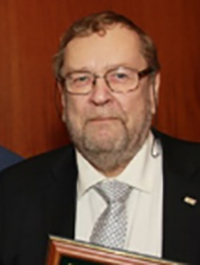 Jouko KOUHI is expert in Connections, welding, stability and fatigue of steel structures. He has been an active member of various ECCS Technical Committees since 1979, working on ENV 1993 part 1.8 from 1999 to 2002.
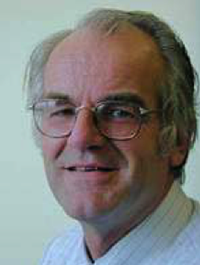 Frans BIJLAARD, Professor of steel structures at the Faculty of Civil Engineering & Geosciences at Delft University of Technology. His main specialties are on stability of steel structures, structural behaviour of joints in steel structures and design of greenhouses.
 The involvement of Professor Jean Pierre MUZEAU in Education and his strong motivation in promoting the use of steel in construction over his career have to be underlined. He has been qualified as “Passeur de Connaissances” (Ndt : conveyor of knowledge) by the Members of the Jury who have underlined his prominent role among the young generations of civil engineers.
 Prof. Joachim LINDNER got a 40-year academic career and extensive experience in civil engineering from lateral torsional buckling through contact splices, historical grey cast iron columns, fatigue behaviour, stability design of glass-beams, scaffolding design, crane girders, plate buckling problems, composite beams and columns, corrugated webs, connection problems and imperfection regulations. He signed around 220 publications.
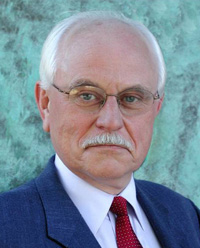 Professor Reidar BJORHOVDE has an impressive academic background, including two Ph.D. in the area of Civil Engineering, and a remarkable professional career which includes several years as a Professor in various universities in North America. He also been the Director of Bjorhovde Group since 1998.
 Professor Carlo URBANO has been active on ECCS committee “Stability of steel structures” since 1975. He has been also present on CEN, IABSE, SSRC committees. Graduated at the Politecnico di Milano in 1963, he dedicated his career to the “Strength of Materials”. He developed scientific research mainly on the general theory of elasticity, stability of elastic equilibrium, response to dynamics and elastoplastic vibrations, shell structures, solutions for steel and reinforced structures. Lately, he has focused his works on the elastic and elastoplastic stability of compressed simple or composed steel members in the presence of mechanical and geometrical imperfections and damages due to cyclic actions. He is the author of an incredible number of papers and publications.
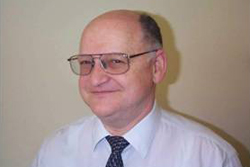 Prof. Ing. Jean-Baptiste SCHLEICH will always be recognised as "Mr Fire” of Europe. He was the leading professor in the development of the "Natural Fire Safety Concept". Under his leadership, the relationship of the fire load to the risk to a structure and its occupants was researched and tested. It is due to his work that structures can now be fire engineered with a significant benefit to the industry, building owners and users.
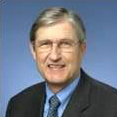 Professor Manfred HIRT had been member of the various ECCS Technical Committees. He wrote more than 130 publications as author or co-author. Director of the Steel Structures Laboratory (ICOM) of the Swiss Federal Institute of Technology at Lausanne (EPFL), Prof. Hirt was known on the international scene for his expertise in the field of fatigue and fracture mechanics of steel structures, loads and action on structures, structural safety and serviceability and steel-concrete composite construction. In August 2003, he had been elected President of the International Association for Bridge and Structural Engineering (IABSE).
 Professor Giulio BALLIO was born in Rome, on 4 March 1940, and graduated in Aeronautical Engineering at the “Politecnico of Milan”, in 1963. He was Ordinario of the Science of Construction at Pavia University and, subsequently, of Construction in Steel at the Politecnico of Milan, where he has also been responsible, since 1985, for the Material Tests Laboratory.
 Prof. Dr.-Ing. Gerhard SEDLACEK, was a leading and opinion-forming person in various ECCS technical committees and subcommittees. He was one of the most active person in the European steel research sector as well as in the European codification field. His various activities covered a huge range beginning from intelligent design of steel and composite structures to researching, applying of research results, safety requirements, teaching and training of students and engineers, promotion and developing of steel structures and design tools for a better market share.
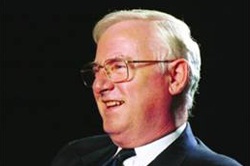 Professor Patrick DOWLING started his working life as an employee of BCSA and subsequently worked both in industry and academia. He was extensively involved with ECCS in plate buckling research and was Chairman of the CEN Eurocode 3 Committee.
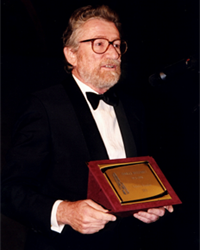 When awarded, Professor Federico MAZZOLANI was Director of the “Institute of Technique of Construction” at the Engineering Faculty of Naples, Italy. Born in Milan, in 1938, and graduated in Civil Engineering at the University of Naples, Prof. Federico M. Mazzolani co-operated since 1970 with ECCS, assuming the responsibility of Committee chairmanship. His activity has been characterised by the issue of several fundamental documents, which played a leader role in the development of the European codification at the level of both national codes and Eurocodes.
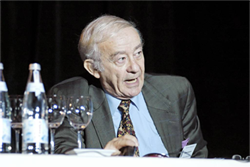 Scientific Manager and Deputy General Manager of the French Technical and Industrial Centre of Steel Construction (CTICM), Professor Jacques BROZZETTI contributed highly to the development of the European Steel Construction. He had a long involvement with various research projects including stability problems, composite construction, fatigue and fire behaviour of steel structures. As a result, he had been involved with many Codes and design guides comprising writing activities. He worked with the profession to promote the steel construction on its various aspects.
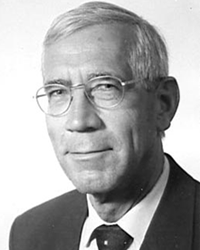 Prof. Jan W.B. STARK, from the University of Delft, The Netherlands, had made substantial contributions to the construction industry in general, and more specifically with regard to steel and composite structures. For many years, he had been an active member of CEN and served ECCS in various committees. The Charles Massonnet Award was presented to him to express our gratitude for his high standard and valuable contribution to the steel construction industry.
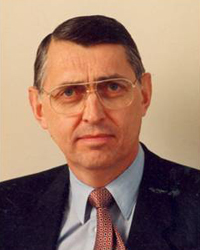 Close collaborator of Professor Charles Massonnet, Professor René MAQUOI, was awarded in recognition of his efforts for the development of steel and composite construction. Indeed, Professor Massonnet was his “master” and conducted his first step in the ECCS activities.







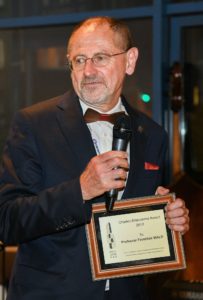 Frantisek Wald concentrates on the connection and fire design of steel structures. He prepared the component model for column bases and the component based finite element model of joints. He works in ECCS Technical Committee 10 - Structural joints and in Project team for preparation of standard - EN 1993-1-8:2020.