What is CE Marking?
CE Marking is a regulatory mark applied by the manufacturer that is a declaration to public authorities and clients that the product satisfies required levels of health and safety (concerning such issues as release of hazardous substances and structural strength).
Who is affected by CE Marking?
CE Marking applies to components for incorporation in the vast majority of steel structures including buildings, bridges, towers and masts and has implications for all steelwork contractors, steel stockholders, service centres and distributors. It also applies to manufacturers of light-gauge purlins, decking and sheeting and the manufacturers of proprietary products including cellular beams etc. It also has implications for galvanizers and steel benders.
CE Marking also has implications for consultants and main contractors. It is the consultant’s responsibility to choose the Execution Class for the structure (or for each separate component or detail if these differ throughout the structure). The method for determining Execution Class is given in the European fabrication standard EN 1090-2.
From the 1st July 2014, the main contractor should ensure that the steelwork contractors and other construction product manufacturers they employ have the correct CE Marking and the correct Execution Class for the structure under construction. ECCS’s web site lists those members with the certified capability to apply CE Marking together with their Execution Class. This allows main contractors (or other specifiers) to select the appropriate steelwork contractor and/or construction product manufacturer.
When does it come in to force?
The deadline for the mandatory CE Marking of fabricated steelwork is 1st July 2014. After this date it will be illegal to trade fabricated steelwork and related products on the European market. CE Marking is regulated by criminal law and the penalties for not CE Marking or incorrect CE Marking, if found guilty, are a fine, imprisonment or both. Potentially, however, the greatest impact could be on the manufacturer’s business: this could be closed until the proper certification was in place, and the manufacturer could also be compelled to recall non-complying products already on the market. It is the ECCS’s intention to monitor the introduction process to ensure that companies without the appropriate FPC certification are not competing against properly-certified ECCS Members and National Associate Members.
How does a Steelwork Contractor become qualified for CE Marking?
The CE Marking standard for fabricated steelwork is EN 1090-1 and this is supported by the fabrication standard EN 1090-2 and the welding quality management standard EN ISO 3834. One important part is identifying a suitably competent Responsible Welding Co-ordinator (RWC) to control the company's welding systems. Those affected by CE Marking must put in place a Factory Production Control system (FPC) described in EN 1090-1 and have the system certified by a Notified Body.
How long will it take to get a certified FPC system?
For those companies without certified EN ISO 9001 and certified EN ISO 3834 systems in place the process can take between 12 months and 2 years.
With only 14 months to go it is essential that all those affected start the process of gaining FPC certification for CE Marking as soon as possible.
What is Execution Class?
The CE Marking standard, EN 1090-1, introduces the concept of Execution Class. Execution Class establishes the required quality of fabrication and can be applied to the whole structure, an individual member or particular details. There are four Execution Classes with Execution Class 4 being the highest level of quality control and Execution Class 1 the lowest. In general they apply to the following structures:
Execution Class 1 - farm building (the consequence of failure is deemed to be low)
Execution Class 2 - the majority of buildings Execution Class 3 - bridges (and most structures subject to fatigue)
Execution Class 4 - long-span bridges (the consequence of failure is deemed to be particularly high)
It is the consultant’s/client’s responsibility to select the Execution Class and recommendations for determining Execution Class are given in EN 1090-2.
Steelwork contractors must have in place the correct certified FPC system for the correct Execution Class. For example those steelwork contractors with Execution Class 2 systems cannot fabricate Execution Class 3 or 4 steelwork. Those with Execution Class 4 systems can fabricate all structures.
What should be declared under radioactivity emission?
Normally you declare NPD (No Performance Determined). If you are asked to declare the radioactive emission you should compare the values against the permitted limit for the country where the construction will be erected.
Can a customer outside EU request steel structure with CE marking?
CE Marking is only mandatory within the European Union and EFTA member states. But countries or clients outside may request CE marking.
Does a steel fabricator, working as a subcontractor for a certified fabricator, have to be certified according to EN 1090-1 and CE Mark the fabricated products?
It is recommended that all subcontractors become certified.
Can a CE marked product fabricated in one member state be refused in other member state based on lack of national forewords evidence of compliance?
No, only if the declared essential properties do not fulfill the national provisions. E. g. Finland is the only country that requires declaration of “Deformation at serviceability limit state”.
Is there a list of products covered by EN 1090-1?
No, but EN 1090-1 comprises construction products of steel and aluminum which are permanently incorporated into the construction works (buildings and civil engineering works).
Is a manufacturer of final products forced to order constituent products carrying CE-marking?
Where a constituent product is covered by a harmonized standard or an ETA has been issued for it, the manufacturer must order CE Marked products.
If fabricated component includes steel constituent products which are not covered by any of European standards listed in EN 1090-2, is the component allowed to be CE marked according to EN 1090-1?
Yes, but their properties shall be specified by the designer.
Do some member states require the certification of manufacturers factory production control (FPC) to EN 1090-1 before the co-existence period of EN 1090-1 ends?
Yes, e. g. in Germany the big clients require certification and also CE Marking.
When a Notified Body operates in another country, is it a requirement to include this scope in their mandate?
There is not.
Are welders and welding operator qualification and WPQR only accepted when using standards listed in the EN 1090-2?
Yes, this is stated in clause 7.4.2 and table 12 and 13 in EN 1090-2.
Can a RWC (Responsible Welding Coordinator) work as a RWC for more than one fabricator?
Yes, but we advise not more than 2 fabricators. For small companies this may be more.
Today we have different types of cleanliness of steel, e. g. one method is shot blasting and another is grit blasting. This is expressed in microns and is not the same as SA for fineness.
We need something in addition to verify that the requirement of surface cleanliness, SA, is according to a standard. Do you know which standard to use?
The standard to use is ISO 8501-1 which contains photos / pictures of different grade of SA. It is not allowed to use electronic pictures, only printed as shown in the standard.
- Can we hire a welding coordinator?
Yes, you may hire a responsible welding coordinator
- Does the welding coordinator have to be present during welding?
The responsible welding coordinator (RWQ) doesn’t have to be present during the welding but shall supervise the welding operations. He or she shall also provide a welding plan, qualified welders and welding operators and ensure the fabricator only to use WPS based on WPQR. See also EN ISO 14731.
- Is a special education required for the welding coordinator?
The competence of RWC is specified in EN ISO 14731. IWS, IWT or IWE diploma is not a requirement but a good way to demonstrate qualifications. Supervision of welding operations is a task to be described by the producer, who describes, among other things, how the level of competence for supervision is solved. Some countries have national approved courses/trainings with examination. Without any documented education or trainings, the auditor from the National Body will do a more searching interview and approve the appointed RWC, depending on the execution class.
Questions reg. tack welds: According to ISO 1090-2, the minimum length of tack welds shall be the smallest of four times the thickness of the thickest part or 50mm, unless testing may show that a shorter length is satisfactory.
When we weld a column of square hollow section 100mmx100mm we tack weld the four corners (at most 20 mm length) before the final welding. We use no WPS for the tack weld. The tack welds are removed before final welding.
A 50 mm long weld will cause the column to bend.
What is the right thing to do in order to carry out the work in accordance to EN 1090-2? Do we need to test/ do a WPQR and WPS for tack weld that will be removed?
First: You shall not tack weld the corners, see EN 1090-2, Figure E.1.
EN 1090-2, clause 7.5.7: The tack weld may be shorter than four times the thickness of the thickest part or 50mm if the WPS is qualified (WPQR).
The tack welds have to be removed before the final weld.
If it is to be incorporated into the final weld, the WPS has to be qualified with the suitable shape of the tack weld.
NDT, with the exception of visual inspection, shall be performed by personnel qualified according to Level 2 as defined in EN 473.
But what about visual inspection after welding? What qualifications are required for personnel to perform visual inspection of welds?
EN 1090-2, clause 12.4.2.3: The visual inspection shall be carried out according to EN 970, but this standard has been replaced by EN ISO 17637:2011. In chapter 3 it says that visual testing (inspection) of welds and evaluation of the results for final acceptance shall be carried out by qualified and capable personnel (e. g. approved welders). It is recommended that personnel are qualified in accordance with ISO 9712 or an equivalent standard at an appropriate level in the relevant industry sector.
EN 1090-2 states that if the material temperature is below 5 degrees C, the appropriate heating may be required.
For steels higher than the S355, heating shall be carried out if the material temperature is below 5 degrees C.
Does this mean that it is not necessary with heating of steel S355 when the temperature of the steel for welding is below 5 degrees C?
It is recommended to heat all steel if the temperature is below 5 degrees C.
EN 1090-2: Table 24 and supplementary NDT:
We have some doubts about the definition of transverse and longitudinal fillet welds. In table 24 there is a clause on fillet welds in transverse direction under tensile or shear, and another clause for longitudinal welds.
Note 1 state that longitudinal welds are carried out in parallel with the component axis. All other welds are considered to be transverse welds.
What is meant here as the component axis? Is it the plate being welded or is the force direction?
It seems a little strange that the plate geometry governs whether it is a longitudinal or transverse weld and therefor how much control the extent of NDT shall be.
Note 1 seems to assume that force direction in fillet welds is coincident with the component axis. This is correct e.g. for fillet welds in beams between web and flange without transverse load from the flange.
It is in principle correctly to have an increased inspection in areas where high tensile stresses will occur across the weld. But there is no reason why the plate or the component geometry shall govern the designation “in parallel” or “transverse”. The direction of force (or tension) relative to the weld geometry will govern the determination of the designation of the weld direction. The table is under revision and will be modified. Hopefully this will result in a better description of the weld types.
What is the requirement of foundation bolts?
According to EN 1090-2, Section 5.6.7 Foundation Bolts: Mechanical properties of anchor bolts shall be in accordance with EN ISO 898-1 or produced from hot rolled steel in accordance with EN 10025-2 to EN 10025-4. If described, rebar may be used. In this case they shall be in accordance with ISO 10080, and the steel grade should be specified.
Stockholder: Basically we had set up a system where the charge number appears on all item line we deliver (to meet the requirement for traceability). However, we only send the inspection documents along with the delivery when this is requested.
Can we do so, or should we automatically send the inspection documents along with all our delivery?
Refer to EN 1090-2, Section 5.2 Identification, inspection documents and traceability: “The properties of supplied constituent products shall be documented in a way that enables them to be compared to the specified properties. Their conformity with the relevant product standard shall be checked in accordance with 12.2. For metallic products, the inspection documents according to EN 10204 shall be as listed in Table 1.” Section 12.2.1 Constituent products says: “Documents supplied with constituent products in accordance with the requirements of Clause 5 shall be checked to verify that the information on the products supplied matches those ordered.” We recommend therefor to send the inspection documents along with the delivery in order to check compliance with the order (dimensions and characteristics).
 Professor J.M. ROTTER was born in Chesterfield, England and graduated at Cambridge University when he was awarded a Commonwealth Scholarship to study in Australia. He got a PhD in civil engineering from the University of Sydney. His main specialty is the Buckling of Shells.
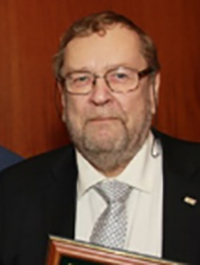 Jouko KOUHI is expert in Connections, welding, stability and fatigue of steel structures. He has been an active member of various ECCS Technical Committees since 1979, working on ENV 1993 part 1.8 from 1999 to 2002.
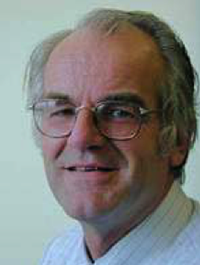 Frans BIJLAARD, Professor of steel structures at the Faculty of Civil Engineering & Geosciences at Delft University of Technology. His main specialties are on stability of steel structures, structural behaviour of joints in steel structures and design of greenhouses.
 The involvement of Professor Jean Pierre MUZEAU in Education and his strong motivation in promoting the use of steel in construction over his career have to be underlined. He has been qualified as “Passeur de Connaissances” (Ndt : conveyor of knowledge) by the Members of the Jury who have underlined his prominent role among the young generations of civil engineers.
 Prof. Joachim LINDNER got a 40-year academic career and extensive experience in civil engineering from lateral torsional buckling through contact splices, historical grey cast iron columns, fatigue behaviour, stability design of glass-beams, scaffolding design, crane girders, plate buckling problems, composite beams and columns, corrugated webs, connection problems and imperfection regulations. He signed around 220 publications.
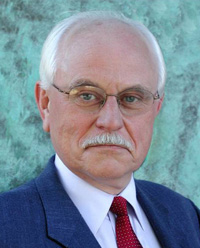 Professor Reidar BJORHOVDE has an impressive academic background, including two Ph.D. in the area of Civil Engineering, and a remarkable professional career which includes several years as a Professor in various universities in North America. He also been the Director of Bjorhovde Group since 1998.
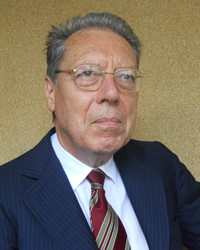 Professor Carlo URBANO has been active on ECCS committee “Stability of steel structures” since 1975. He has been also present on CEN, IABSE, SSRC committees. Graduated at the Politecnico di Milano in 1963, he dedicated his career to the “Strength of Materials”. He developed scientific research mainly on the general theory of elasticity, stability of elastic equilibrium, response to dynamics and elastoplastic vibrations, shell structures, solutions for steel and reinforced structures. Lately, he has focused his works on the elastic and elastoplastic stability of compressed simple or composed steel members in the presence of mechanical and geometrical imperfections and damages due to cyclic actions. He is the author of an incredible number of papers and publications.
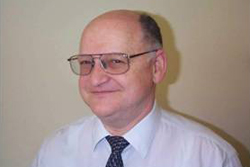 Prof. Ing. Jean-Baptiste SCHLEICH will always be recognised as "Mr Fire” of Europe. He was the leading professor in the development of the "Natural Fire Safety Concept". Under his leadership, the relationship of the fire load to the risk to a structure and its occupants was researched and tested. It is due to his work that structures can now be fire engineered with a significant benefit to the industry, building owners and users.
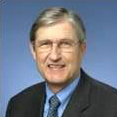 Professor Manfred HIRT had been member of the various ECCS Technical Committees. He wrote more than 130 publications as author or co-author. Director of the Steel Structures Laboratory (ICOM) of the Swiss Federal Institute of Technology at Lausanne (EPFL), Prof. Hirt was known on the international scene for his expertise in the field of fatigue and fracture mechanics of steel structures, loads and action on structures, structural safety and serviceability and steel-concrete composite construction. In August 2003, he had been elected President of the International Association for Bridge and Structural Engineering (IABSE).
 Professor Giulio BALLIO was born in Rome, on 4 March 1940, and graduated in Aeronautical Engineering at the “Politecnico of Milan”, in 1963. He was Ordinario of the Science of Construction at Pavia University and, subsequently, of Construction in Steel at the Politecnico of Milan, where he has also been responsible, since 1985, for the Material Tests Laboratory.
 Prof. Dr.-Ing. Gerhard SEDLACEK, was a leading and opinion-forming person in various ECCS technical committees and subcommittees. He was one of the most active person in the European steel research sector as well as in the European codification field. His various activities covered a huge range beginning from intelligent design of steel and composite structures to researching, applying of research results, safety requirements, teaching and training of students and engineers, promotion and developing of steel structures and design tools for a better market share.
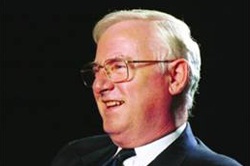 Professor Patrick DOWLING started his working life as an employee of BCSA and subsequently worked both in industry and academia. He was extensively involved with ECCS in plate buckling research and was Chairman of the CEN Eurocode 3 Committee.
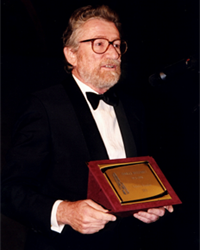 When awarded, Professor Federico MAZZOLANI was Director of the “Institute of Technique of Construction” at the Engineering Faculty of Naples, Italy. Born in Milan, in 1938, and graduated in Civil Engineering at the University of Naples, Prof. Federico M. Mazzolani co-operated since 1970 with ECCS, assuming the responsibility of Committee chairmanship. His activity has been characterised by the issue of several fundamental documents, which played a leader role in the development of the European codification at the level of both national codes and Eurocodes.
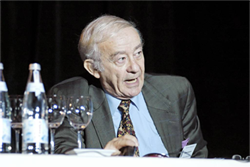 Scientific Manager and Deputy General Manager of the French Technical and Industrial Centre of Steel Construction (CTICM), Professor Jacques BROZZETTI contributed highly to the development of the European Steel Construction. He had a long involvement with various research projects including stability problems, composite construction, fatigue and fire behaviour of steel structures. As a result, he had been involved with many Codes and design guides comprising writing activities. He worked with the profession to promote the steel construction on its various aspects.
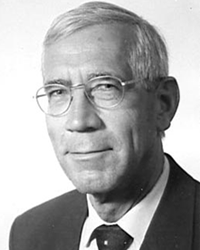 Prof. Jan W.B. STARK, from the University of Delft, The Netherlands, had made substantial contributions to the construction industry in general, and more specifically with regard to steel and composite structures. For many years, he had been an active member of CEN and served ECCS in various committees. The Charles Massonnet Award was presented to him to express our gratitude for his high standard and valuable contribution to the steel construction industry.
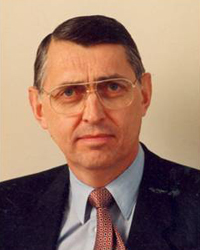 Close collaborator of Professor Charles Massonnet, Professor René MAQUOI, was awarded in recognition of his efforts for the development of steel and composite construction. Indeed, Professor Massonnet was his “master” and conducted his first step in the ECCS activities.






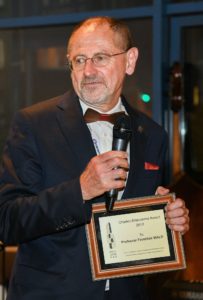 Frantisek Wald concentrates on the connection and fire design of steel structures. He prepared the component model for column bases and the component based finite element model of joints. He works in ECCS Technical Committee 10 - Structural joints and in Project team for preparation of standard - EN 1993-1-8:2020.