Accompanying measure for Dissemination, Valorisation and Collaborative Exploitation of circularity of constructional steel products
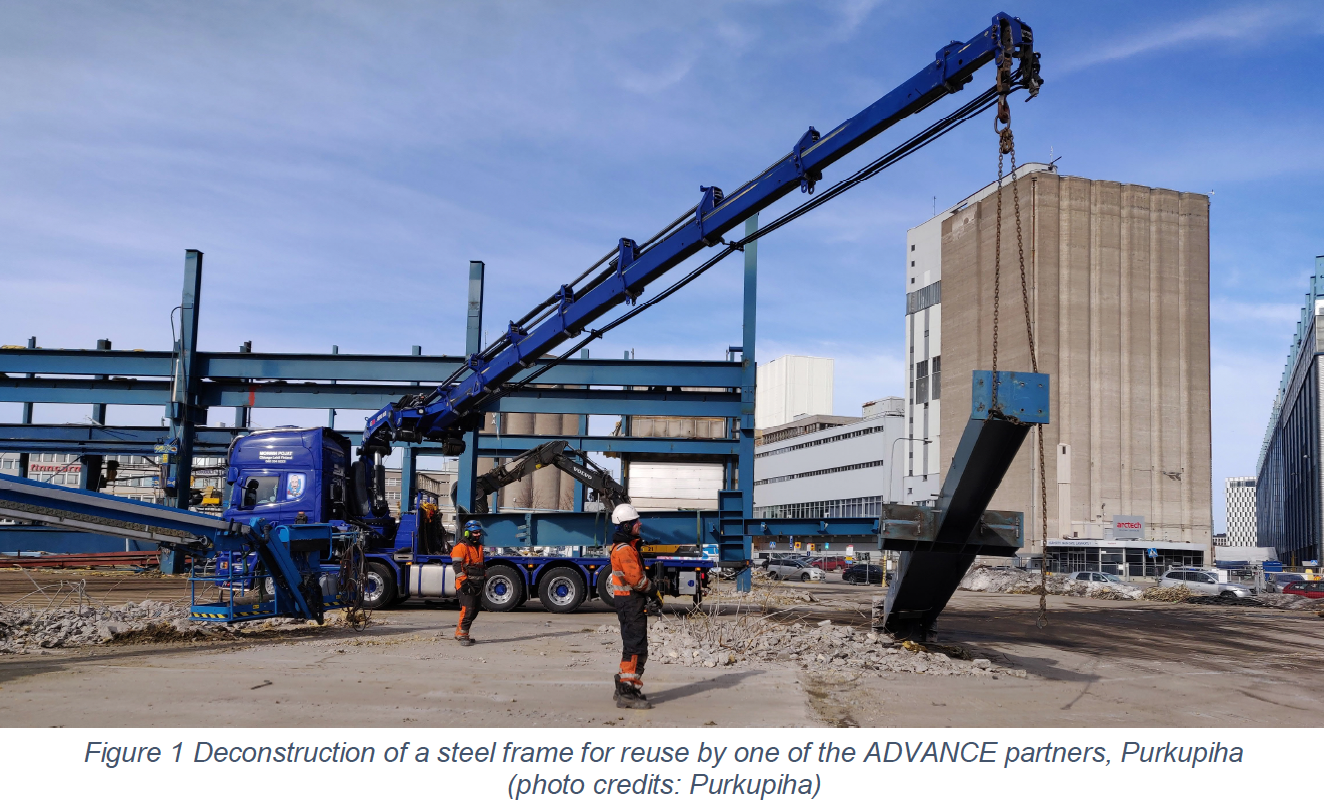
 The project’s ambition is to contribute to greenhouse gas reduction and circular economy goals by addressing these challenges in both deconstruction and reuse of existing steel buildings, and in the design of new buildings, their construction and documentation to facilitate future reuse. Its scope includes reuse of constituent products, fabricated components, and reuse of component assemblies. The reused material may originate from primary structures (frames, see Figure 1), secondary structures and envelopes.
The reduction of greenhouse gas emissions of steel industry became essential in the recent years with the major focus on the construction sector, the single largest source of its environmental footprint. The construction sector comprises the opportunity to establish steel-based technologies in a leading position for the decarbonisation of other relevant industries dependent on steel solutions.
The activities supporting this goal can be divided into two categories (a) efficient and clean energy utilization in steelmaking and (b) taking advantage of excellent durability of steel products that enable their re-manufacturing and reuse without the need of energy intensive recycling. The project focussed on the latter category and utilized and further developed the outcomes of several successful background projects such as PROGRESS, SB STEEL and LVS3.
Although some of the background projects had more general or more limited scope than ADVANCE project, it is always possible to generalize or select the topics suitable for the ambition. For instance, PROGRESS project focused primarily on the single-storey, steel framed buildings, but its outcomes are generally not limited to those structural typologies. Many of the project results can be directly applied to all constructional steelwork and, with some modifications, to the timber and prefabricated concrete elements as well. Single-storey buildings were typically used in the project as demonstration cases because of their simplicity, demountability and relatively large number of successful reuse cases over the last decades.
It is expected that existing steel buildings can be reused in-situ, relocated or deconstructed into elements such as cold-formed or hot-rolled sections, sheets, panels, frames or truss girders. These components have very high reuse potential, but require verification of the material quality, dimensions and tolerances in order to be included in new building projects. The future reuse of modern buildings, however, may be different, because those structures are increasingly designed as systems and their design information can be easily maintained for instance as a building information model (BIM). Therefore, the ADVANCE project addresses both topics and its results will cover both, existing and future buildings.
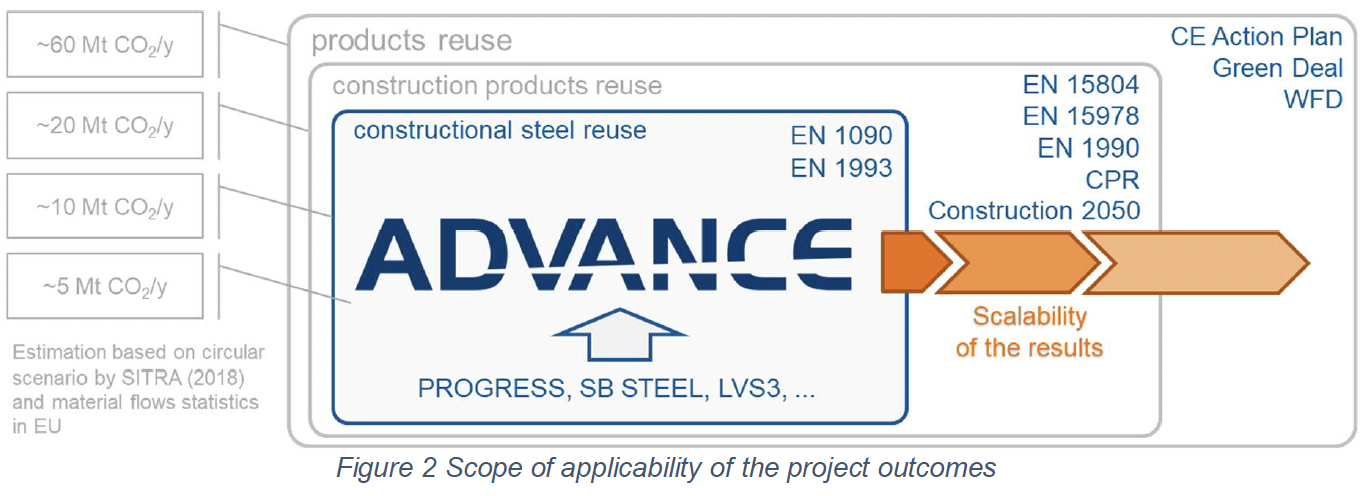
The ambition to provide pathway to achieve impact beyond the scope of existing projects can be described in three levels: (1) to address all constructional steelwork with the support of partners and background from PROGRESS, SB STEEL and LVS3 projects, (2) to extend it to other construction products and materials in the generalized recommendations for reuse and (3) to select suitable outcomes (such as LCA methodology and reusability assessment methodology) supporting recovery and reuse of any other fabricated building products (see Figure 2).
The primary objective was to increase the recovery and reuse of constructional steelwork by providing engineers, investors, contractors and other decision makers with reliable performance data and guidance. This was achieved by disseminating the information about the products, systems, methods and protocols that facilitate reuse of various components of constructional steelwork using the tools and methodologies developed within activities of the consortium partners.
The outcomes of the project include recommendations to enable reuse of building components in-situ or in different location(s), and in the original layout or in a different design with the necessary modifications/adaptations to resist the new external loads (due to the relocation) or internal loads (due to the modification of the structural layout). Our goal was to address the wider scientific, business and engineering community in the Member States with the localized Recommendations for Reuse, information brochure, mobile app and presentation materials.
In particular, the objectives were to:
Objective 1: Provide necessary guidance for the successful reuse of existing components or structures and design of new ones with improved reusability, introduce recommendations for product/waste status and material testing protocol for recertification of steel products in the updated Recommendations for Reuse
(European Recommendations for Reuse of Steel Products in Single-Storey Buildings) from PROGRESS project;
Objective 2: Support systematic and transparent declaration of the environmental benefits of steel reuse with the methodology to declare LCA beyond the system boundary implemented in the mobile LCA app and web tool;
Objective 3: Increase awareness about the alternative end-of-life options for constructional steel and steel-based products by sharing information about successful reuse cases and circular business models in 7 workshops;
Objective 4: Identify the possibilities and roadmaps for scaling up the outcomes of the core background projects beyond their original focus area to reach two milestones (a) universal framework for the constructional steelwork and (b) universal framework for any reusable building components and works connected by steel connectors.
12 organisations participated in the project implementation (2 research institutes, 5 industrial associations, demolition contractor and 4 universities).
All of the following target groups from 'Circular Economy Principles for Buildings Design' benefit from the project results and are addressed:
- Building users, facility managers and owners,
- Design teams (engineering & architecture of buildings),
- Contractors and builders,
- Manufacturers of construction products,
- Deconstruction and demolition teams,
- Investors, developers and insurance providers,
- Government / Regulators / Local authorities.


ADVANCE is an EU funded project (Grant Agreement Number 101112269 (RFCS-2022) under the Research Fund for Coal and Steel
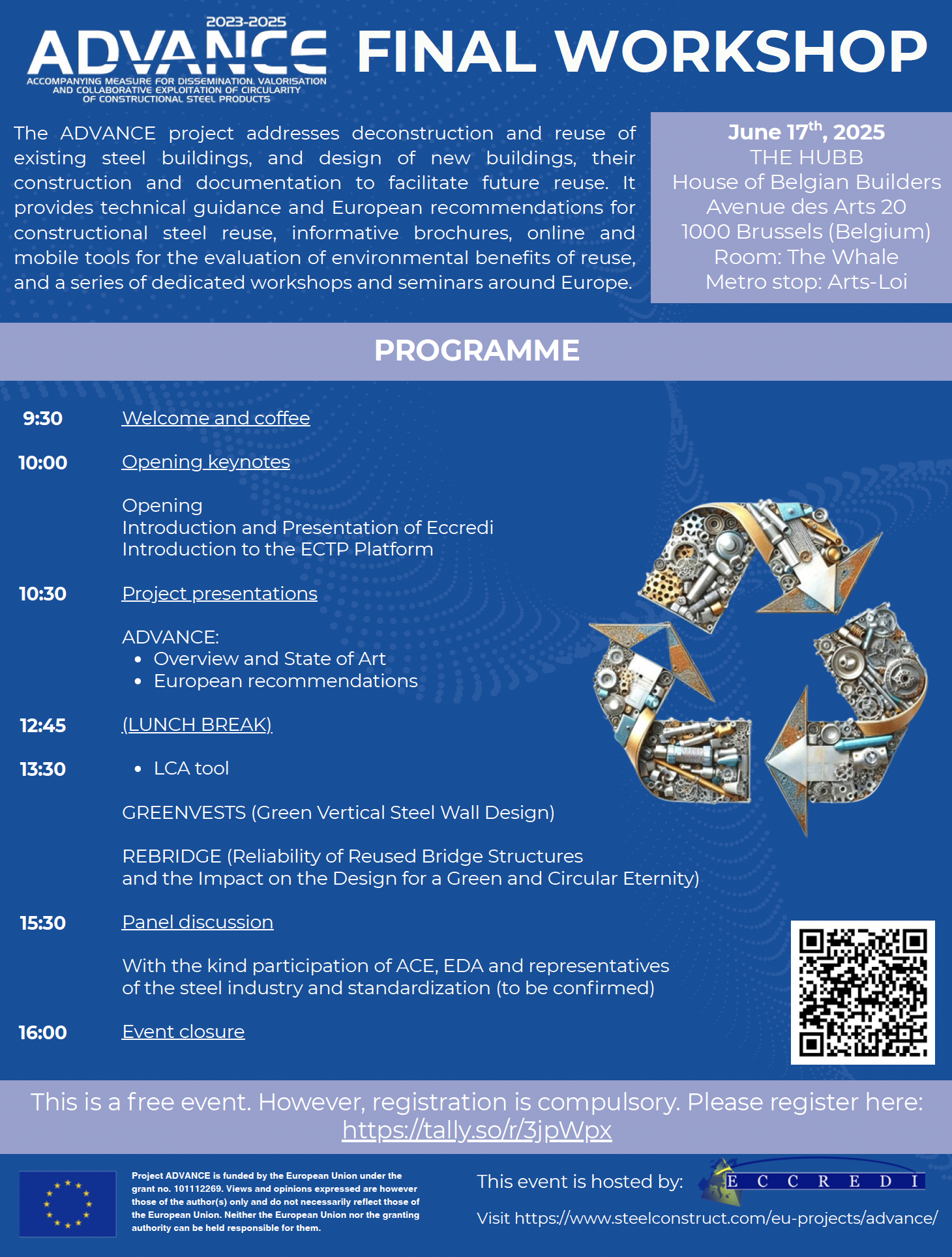
The project final workshop took place in Brussels on 2025-06-17.
The Recommendations for Reuse of Steel Products in 7 languages are available here:
 Professor J.M. ROTTER was born in Chesterfield, England and graduated at Cambridge University when he was awarded a Commonwealth Scholarship to study in Australia. He got a PhD in civil engineering from the University of Sydney. His main specialty is the Buckling of Shells.
 Jouko KOUHI is expert in Connections, welding, stability and fatigue of steel structures. He has been an active member of various ECCS Technical Committees since 1979, working on ENV 1993 part 1.8 from 1999 to 2002.
 Frans BIJLAARD, Professor of steel structures at the Faculty of Civil Engineering & Geosciences at Delft University of Technology. His main specialties are on stability of steel structures, structural behaviour of joints in steel structures and design of greenhouses.
 The involvement of Professor Jean Pierre MUZEAU in Education and his strong motivation in promoting the use of steel in construction over his career have to be underlined. He has been qualified as “Passeur de Connaissances” (Ndt : conveyor of knowledge) by the Members of the Jury who have underlined his prominent role among the young generations of civil engineers.
 Prof. Joachim LINDNER got a 40-year academic career and extensive experience in civil engineering from lateral torsional buckling through contact splices, historical grey cast iron columns, fatigue behaviour, stability design of glass-beams, scaffolding design, crane girders, plate buckling problems, composite beams and columns, corrugated webs, connection problems and imperfection regulations. He signed around 220 publications.
 Professor Reidar BJORHOVDE has an impressive academic background, including two Ph.D. in the area of Civil Engineering, and a remarkable professional career which includes several years as a Professor in various universities in North America. He also been the Director of Bjorhovde Group since 1998.
 Professor Carlo URBANO has been active on ECCS committee “Stability of steel structures” since 1975. He has been also present on CEN, IABSE, SSRC committees. Graduated at the Politecnico di Milano in 1963, he dedicated his career to the “Strength of Materials”. He developed scientific research mainly on the general theory of elasticity, stability of elastic equilibrium, response to dynamics and elastoplastic vibrations, shell structures, solutions for steel and reinforced structures. Lately, he has focused his works on the elastic and elastoplastic stability of compressed simple or composed steel members in the presence of mechanical and geometrical imperfections and damages due to cyclic actions. He is the author of an incredible number of papers and publications.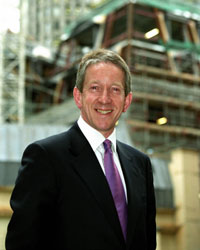
 Prof. Ing. Jean-Baptiste SCHLEICH will always be recognised as "Mr Fire” of Europe. He was the leading professor in the development of the "Natural Fire Safety Concept". Under his leadership, the relationship of the fire load to the risk to a structure and its occupants was researched and tested. It is due to his work that structures can now be fire engineered with a significant benefit to the industry, building owners and users.
 Professor Manfred HIRT had been member of the various ECCS Technical Committees. He wrote more than 130 publications as author or co-author. Director of the Steel Structures Laboratory (ICOM) of the Swiss Federal Institute of Technology at Lausanne (EPFL), Prof. Hirt was known on the international scene for his expertise in the field of fatigue and fracture mechanics of steel structures, loads and action on structures, structural safety and serviceability and steel-concrete composite construction. In August 2003, he had been elected President of the International Association for Bridge and Structural Engineering (IABSE).
 Professor Giulio BALLIO was born in Rome, on 4 March 1940, and graduated in Aeronautical Engineering at the “Politecnico of Milan”, in 1963. He was Ordinario of the Science of Construction at Pavia University and, subsequently, of Construction in Steel at the Politecnico of Milan, where he has also been responsible, since 1985, for the Material Tests Laboratory.
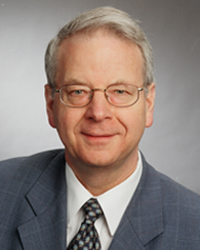 Prof. Dr.-Ing. Gerhard SEDLACEK, was a leading and opinion-forming person in various ECCS technical committees and subcommittees. He was one of the most active person in the European steel research sector as well as in the European codification field. His various activities covered a huge range beginning from intelligent design of steel and composite structures to researching, applying of research results, safety requirements, teaching and training of students and engineers, promotion and developing of steel structures and design tools for a better market share.
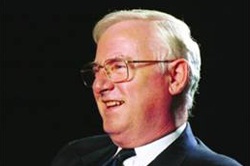 Professor Patrick DOWLING started his working life as an employee of BCSA and subsequently worked both in industry and academia. He was extensively involved with ECCS in plate buckling research and was Chairman of the CEN Eurocode 3 Committee.
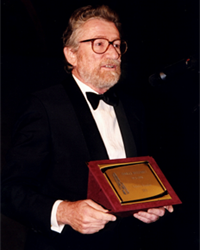 When awarded, Professor Federico MAZZOLANI was Director of the “Institute of Technique of Construction” at the Engineering Faculty of Naples, Italy. Born in Milan, in 1938, and graduated in Civil Engineering at the University of Naples, Prof. Federico M. Mazzolani co-operated since 1970 with ECCS, assuming the responsibility of Committee chairmanship. His activity has been characterised by the issue of several fundamental documents, which played a leader role in the development of the European codification at the level of both national codes and Eurocodes.
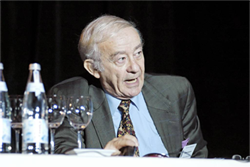 Scientific Manager and Deputy General Manager of the French Technical and Industrial Centre of Steel Construction (CTICM), Professor Jacques BROZZETTI contributed highly to the development of the European Steel Construction. He had a long involvement with various research projects including stability problems, composite construction, fatigue and fire behaviour of steel structures. As a result, he had been involved with many Codes and design guides comprising writing activities. He worked with the profession to promote the steel construction on its various aspects.
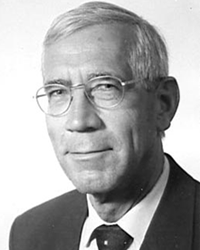 Prof. Jan W.B. STARK, from the University of Delft, The Netherlands, had made substantial contributions to the construction industry in general, and more specifically with regard to steel and composite structures. For many years, he had been an active member of CEN and served ECCS in various committees. The Charles Massonnet Award was presented to him to express our gratitude for his high standard and valuable contribution to the steel construction industry.
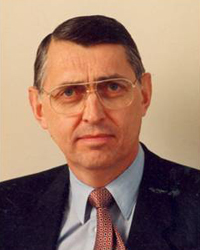 Close collaborator of Professor Charles Massonnet, Professor René MAQUOI, was awarded in recognition of his efforts for the development of steel and composite construction. Indeed, Professor Massonnet was his “master” and conducted his first step in the ECCS activities.
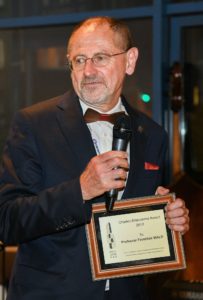 Frantisek Wald concentrates on the connection and fire design of steel structures. He prepared the component model for column bases and the component based finite element model of joints. He works in ECCS Technical Committee 10 - Structural joints and in Project team for preparation of standard - EN 1993-1-8:2020.